
Houston County Arrest Records and Charges
Arrest records in Houston County usually begin with a law-enforcement agency, not the court. The Houston County Sheriff's Office is the county law-enforcement office and jail authority. Its duties include apprehending people who violate the law, lodging them in the county jail, handling civil process, and providing court security. The sheriff records-request channel covers arrest information, jail records, incident reports, calls for service, accident reports, and other law-enforcement data that may be released under Minnesota law.
Court charges after arrest begin at a different point. Law enforcement investigates, gathers evidence, and submits information to the Houston County Attorney's Office. The county attorney then decides whether formal charges should be filed. The office is the chief prosecutor for felony, gross misdemeanor, and juvenile offenses committed in Houston County, and it also handles misdemeanors and petty misdemeanors in unincorporated areas and contracting municipalities. Once a criminal complaint, citation, or other charging document is filed, the charge becomes part of the District Court case record.
That split is important for searches. A custody or arrest question may need the official Houston County inmate records channel, the jail phone line, or a sheriff records request. A charge question usually points to Minnesota Court Records Online, local Court Administration, and sometimes the prosecutor. The full case file, plea, disposition, and sentence are handled as Houston County criminal court records, while this page focuses on the arrest-to-charge path.
Search Houston County Arrest Records and Charges
There is no separate Houston County online mugshot or booking database documented in the research for this charge page. The official in-custody channel exists through the county, but court charges are searched through statewide MCRO Case Search. MCRO is useful for public District Court case information, but it has a key limit for arrest-related searching: pending criminal, traffic, and petty misdemeanor cases without conviction may not return by defendant name. Those cases may still be found by case number.
- Open MCRO Case Search and accept the Terms and Conditions.
- Choose Name, Case Number, Citation Number, or Attorney search. Case number is best when a pending case does not appear by name.
- Use the county location filter and select Houston to narrow the results to Houston County District Court.
- Open the case detail and read the charge list, Register of Actions, hearings, and public documents if available.
- Contact Houston County Court Administration for certified copies, older records, public-terminal-only documents, or questions about court record meaning.
The sheriff channel should be used for arrest information that is not a court filing. The sheriff records-request page states that requests may be made with a Data Request Form by email, mail, or in person, and that fees may apply for copies, media, secure links, extensive searches, compilation, or transcription. Inspection of public records is generally free. Some data can be private, confidential, protected nonpublic, sealed, or redacted.
Houston County Charges After Arrest
The charging decision belongs to the prosecutor. The Houston County Attorney's Office states that law-enforcement agencies investigate crimes and send evidence to the County Attorney for review. Minnesota crimes are prosecuted as offenses against the state. The attorney page also makes a point often missed in arrest searches: a victim does not press or drop criminal charges. Only the prosecutor can decide whether to file, amend, or dismiss charges.
The office is located at 306 S. Marshall St., Suite 2300, Caledonia, MN 55921, and the phone number is 507-725-5802. The attorney page lists local reporting contacts for Caledonia Police, Hokah Police, Houston Police, La Crescent Police, and the Houston County Sheriff. Those agencies may create police reports or arrest data, but the District Court record starts when the charge is filed with the court.
The Houston County Attorney page is the source for local charging-role information, and it connects arrest work to prosecution decisions.
That source is central because it explains who reviews evidence and who can file charges after a Houston County arrest.
Houston County Attorney's Office
306 S. Marshall St., Suite 2300
Caledonia, MN 55921
507-725-5802
Chief prosecutor for Houston County felony, gross misdemeanor, juvenile, and many local misdemeanor matters.
Houston County Charging Documents
A charging document is the written filing that states the accusation. In Houston County District Court, a criminal record may show a complaint, citation, or other charging entry depending on the case type. The research defines a complaint as a charging document in criminal court and a citation as a ticket or charging notice, often used in traffic and petty misdemeanor cases. Indictments are less common and involve grand-jury action in serious matters.
| Document | Who Starts It | Common Use | What to Check |
|---|---|---|---|
| Complaint | Prosecutor, based on law-enforcement evidence | Criminal charges filed in District Court | Charge text, statute, severity level, probable-cause statement if public |
| Information | Prosecutor | Formal charge filing where allowed by procedure | Current charge count, amendments, and plea history |
| Indictment | Grand jury | Serious felony matters | Filed counts, court events, and any sealed or restricted entries |
| Citation | Law enforcement | Traffic, petty misdemeanor, and some misdemeanor matters | Citation number, offense, court date, plea, fine, and disposition |
One arrest can lead to no charges, one charge, or several counts. It can also lead to a later amended complaint. For that reason, the first jail or police record should not be treated as the final court charge list.
Houston County Charge Status
Charge status changes as a case moves through District Court. A complaint may be amended after more evidence is reviewed. A charge may be reduced through plea negotiations. Some counts may be dismissed while another count remains active. MCRO and court documents can show these changes in the case detail, Register of Actions, hearing history, or disposition lines, but remote public access depends on Minnesota court rules.
| Status | Plain Meaning | Search Caution |
|---|---|---|
| Pending | The accusation is still open and has not reached final disposition. | Pending criminal, traffic, and petty cases without conviction may not appear by defendant-name search in MCRO. |
| Amended | The filed charge was changed after the original filing. | Read the latest complaint, docket entry, or disposition rather than only the first charge line. |
| Reduced | The case moved to a lower charge or severity level. | The original arrest basis can differ from the charge that resolved the case. |
| Dismissed | The court or prosecutor ended that count or case. | A dismissed charge is not a conviction, but the public record may still show the filing unless sealed or expunged. |
| Served, quashed, or recalled warrant entry | A warrant tied to a charge changed status. | Confirm current status with Court Administration or the sheriff if action is needed. |
Note: Certified copies and official status checks should go to Houston County Court Administration, because MCRO is not a certified court record.
Houston County Charge vs Conviction
A charge is an accusation. A conviction is an outcome after a guilty plea, guilty verdict, or other conviction event. This distinction matters for employment, housing, licensing, and personal record review. The Minnesota BCA public criminal history system is conviction centered, while MCRO can show court case activity and charges when public. A Houston County arrest record may exist even if a charge was not filed, and a charge may exist even if it later ends in dismissal.
| Point of Comparison | Charge | Conviction |
|---|---|---|
| What it means | An accusation that a person violated a law. | A final finding based on plea, verdict, or other conviction result. |
| Where it may appear | MCRO case details, complaint, citation, or court docket if public. | MCRO disposition and BCA public criminal history when within public scope. |
| Proof level | Filed based on charging rules and probable cause standards. | Requires conviction through the criminal process. |
| Record risk | May be pending, amended, reduced, or dismissed. | May carry sentence, probation, fines, and public criminal-history consequences. |
Minnesota Arrest Records and History
Houston County court charges should not be confused with a statewide criminal-history report. The Minnesota Public Criminal History Search is run through BCA/DPS and focuses on public conviction data, generally convictions public for 15 years after sentence completion. It is not a live arrest log and does not replace the Houston County sheriff records request process for arrest information, jail records, or incident reports.
The sheriff records-request process cites the Minnesota Government Data Practices Act, and public data may be requested from the Sheriff's Office. The Minnesota Government Data Practices Act presumes government data is public unless state or federal law classifies it otherwise. Criminal justice data also has specific rules under Minnesota Statutes section 13.87.
The Caledonia Police Department page is a local source for city policing context in Houston County.
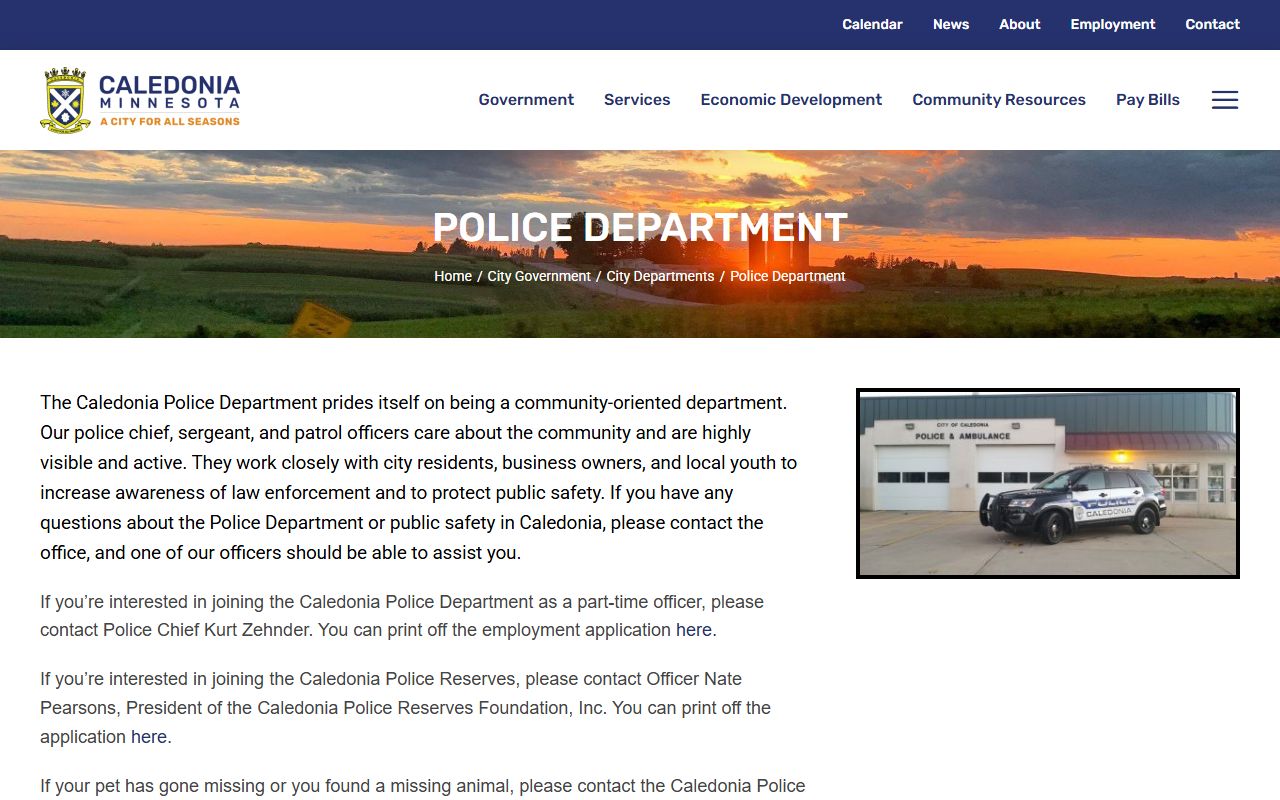
City police records and county court charges may connect in the same incident, but they remain separate records with separate custodians.
Restricted Houston County Charge Records
Public access to Houston County arrest records and court charges is not unlimited. Minnesota Rule of Public Access 8 allows public inspection and copying of many court records through the normal custodian, but remote access is narrower. Rule 4 identifies court-record categories that are not public, including some juvenile, adoption, medical, domestic abuse, harassment, and protected records. MCRO also excludes party street addresses and comment fields across case types.
Juvenile records need special care. The research notes that CHIPS and Juvenile Delinquency Felony 16 case types are not remotely available in MCRO, and juvenile records may be limited to parties, attorneys, court staff, agencies, or people with a court order. Domestic Abuse/OFP and Harassment Restraining Order records are withheld from internet display because of VAWA restrictions. Public civil commitment documents are also not available through MCRO.
Expungement can limit public access after a court order. Minnesota Statutes section 609A.02 defines eligibility categories for criminal expungement petitions, and the state fee schedule lists a criminal expungement filing fee unless a waiver or no-fee path applies. If an expungement is granted, access may be limited according to the order, and agency duties can differ based on the type of sealing.
Houston County Charge Terms
Short definitions help prevent over-reading a court charge after arrest. These terms appear in criminal case records, calendars, and court filings.
- Complaint
- A charging document in criminal court.
- Charge
- An accusation that a person violated a specific criminal or traffic statute.
- Plea
- The defendant's formal answer to a criminal charge, such as guilty or not guilty.
- Disposition
- The result or outcome of a case or charge.
- Sentence
- The punishment or conditions ordered after conviction.
- Expungement
- A court order or statute that seals or limits access to a record.
Note: A missing online result does not prove no arrest, no charge, or no warrant, especially when the case is pending or restricted.