
Houston County Criminal Court Records
Criminal court records in Houston County are District Court records. Minnesota uses District Court as the trial court of general jurisdiction, and the Houston County District Court page states that it has original jurisdiction over criminal cases filed in the county. Once a prosecutor files charges, the case record can include the complaint, charge information, hearing events, pleas, motions, warrants or conditions when public, sentencing, probation events, dispositions, and financial obligations.
The Houston County Attorney is the local prosecutor for felony, gross misdemeanor, and juvenile offenses in Houston County. The office also prosecutes misdemeanors and petty misdemeanors in unincorporated areas and municipalities that contract with the county. Law enforcement investigates and submits evidence for charging review, but the resulting court case file belongs to District Court. For a closer look at the charging step itself, use the court charge records page; for the broader civil, family, probate, traffic, and judgment record path, use Houston County court records.
The official Minnesota Public Criminal History Search is a separate statewide conviction-history tool, not the Houston County District Court case file.
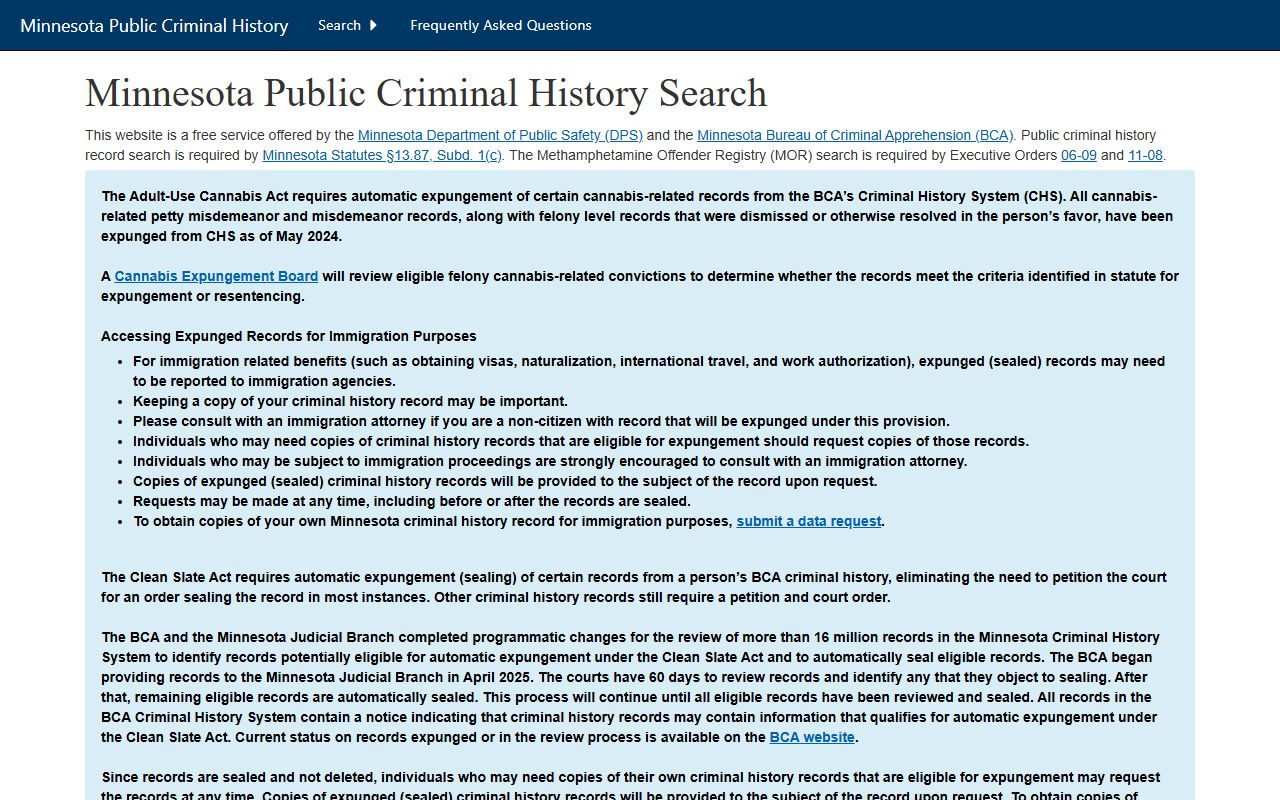
Use BCA criminal history for public conviction-history checks and MCRO for criminal court case activity.
Search Houston County Criminal Court Records
Houston County criminal court records are searched through MCRO Case Search. The Criminal case category can be selected in additional criteria, and Court Locations can be narrowed to Houston County. A case number is often the best search key. MCRO states that pending criminal, traffic, and petty misdemeanor cases with no conviction do not return in Case Search Results or Hearing Search Results when searching by defendant name, although those cases may return by case number.
MCRO search results are not certified records. For certified criminal court instruments, the state fee schedule lists a $14 certified-copy fee and a $28 exemplified and certified copy fee. Houston County Court Administration is the local path for certified copies, courthouse terminal access, older court files, and questions about a record that does not appear online.
- Open MCRO Case Search and accept the Terms and Conditions.
- Search by case number when known, or use a defendant name for public cases that can be returned by name.
- Set Court Locations to County and select Houston to focus on Houston County criminal court records.
- Select Criminal as the case category when narrowing is useful.
- Open the case details and Register of Actions to review hearings, charges, events, disposition, and sentence entries.
- Contact Houston County Court Administration for certified copies or records that are public only at courthouse terminals.
The official BCA criminal history search page is useful when the desired record is public conviction history rather than the full court case file.
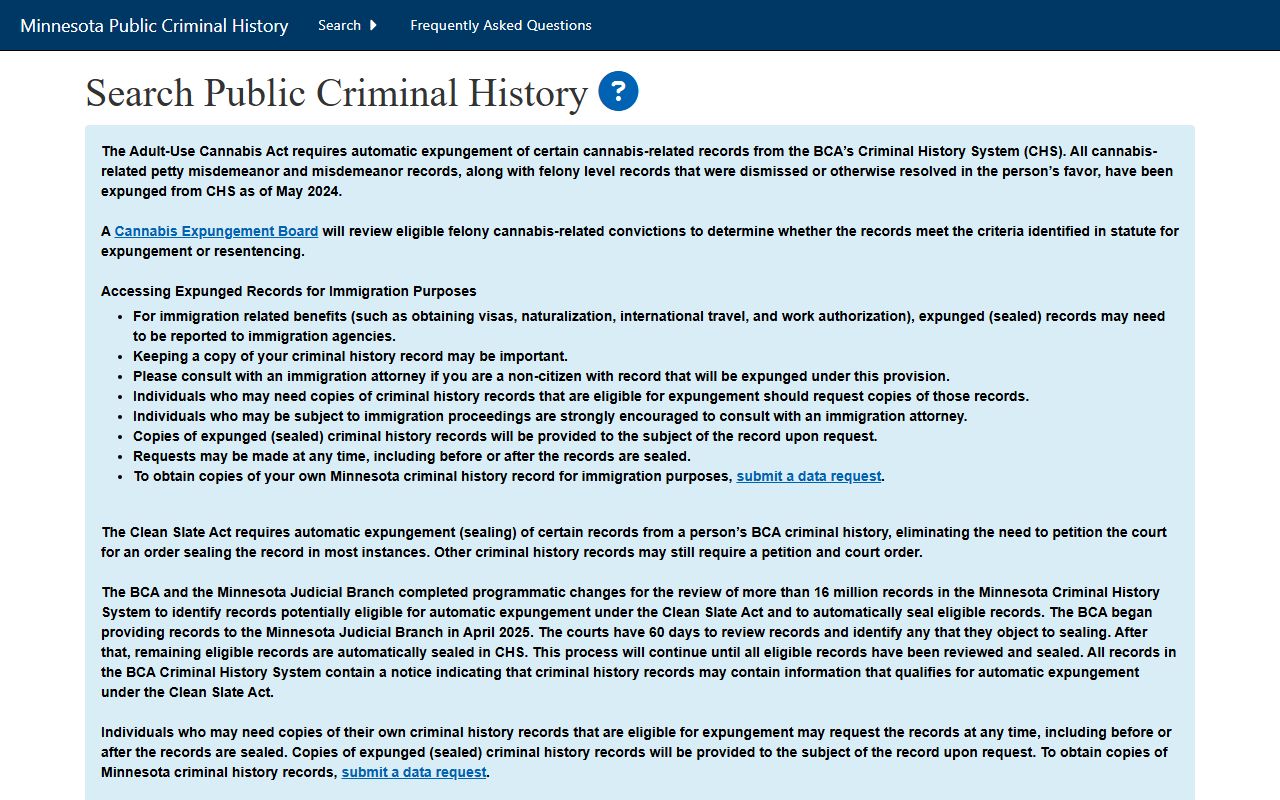
BCA results and MCRO case records can differ because they serve different record purposes.
Houston County Criminal Case Flow
A Houston County criminal court record grows as the case moves through District Court. The first public case entries may show the complaint, filed charges, hearing settings, or warrant-related activity when public. Later entries can show arraignment, motions, pretrial conferences, plea hearings, court trials, probation violations, sentencing, and financial obligations. The County Attorney's page clarifies that victims do not press or drop charges; Minnesota crimes are prosecuted as offenses against the state, and charging or dismissal decisions belong to the prosecutor.
Case flow: Charges Filed › Arraignment › Pretrial and Motions › Plea or Trial › Disposition › Sentencing
Charges Filed: The complaint or charging document opens the criminal case and identifies alleged offenses.
Arraignment: The defendant is advised of the charge, rights, and next court dates; a plea may be entered.
Pretrial and Motions: The docket can show appearances, motions, continuances, evidentiary issues, and hearing settings.
Plea or Trial: The record can show a plea agreement, trial setting, verdict, acquittal, or dismissed counts.
Disposition and Sentencing: The court records the outcome, then may enter jail, prison, probation, fines, fees, restitution, conditions, and review hearings.
What Houston County Criminal Records Show
The core criminal court record is the case-level file. It can include public charge data, docket events, court dates, judge information, plea and disposition details, sentence terms, and public documents when allowed. MCRO excludes party street addresses and comment fields in many case types, but criminal sentencing condition comments can display. If an entry is unclear, compare the Register of Actions to any public document image and then contact Court Administration for official record questions.
| Field | What It Shows |
|---|---|
| Case Number | The District Court case identifier, often including county, case type, year, and sequence. |
| Defendant | The person charged in the criminal case, with protected identifiers limited or redacted. |
| Charges | The alleged offenses filed by the prosecutor, including amended or dismissed charges when recorded. |
| Hearing Events | Scheduled appearances, hearing type, date, time, location, and judicial officer when public. |
| Plea | The defendant's formal answer to a charge, such as guilty or not guilty. |
| Motions and Orders | Requests to the court and judicial decisions, when available remotely or at a terminal. |
| Disposition | The outcome of each charge or the case, such as guilty, dismissed, or acquitted. |
| Sentence | Jail, prison, probation, fines, restitution, conditions, and related sentencing events when public. |
| Financial Obligations | Amounts owed or assessed in the criminal case when shown in the court record. |
Charges vs Convictions
A charge is an accusation filed in court. A conviction is an outcome after a guilty plea, guilty verdict, or other qualifying final result. Houston County criminal court records can show both, and the distinction matters. A filed charge may be amended, reduced, dismissed, or resolved in the defendant's favor. A conviction-history tool may show only conviction data, while the District Court case file can show the path the case took.
| Point | Charge | Conviction |
|---|---|---|
| Meaning | An alleged offense filed by the prosecutor. | A final criminal outcome based on plea or verdict. |
| Timing | Appears early in the court case. | Appears after adjudication or qualifying resolution. |
| Can change | May be amended, reduced, dismissed, or dropped by the prosecutor. | May later be affected by appeal, postconviction relief, sealing, or expungement. |
| Where to check | MCRO case details and Register of Actions. | MCRO disposition and BCA public criminal history when public. |
| Risk of mistake | Reading a charge as guilt is inaccurate. | Still requires attention to sentence completion, expungement, and identity matching. |
Houston County Criminal Search Limits
Criminal court records are public only to the extent Minnesota rules allow. Minnesota Rule of Public Access 8 permits access to many public court records but limits remote access. Rule 4 identifies records that are not accessible to the public. Juvenile delinquency records have separate limits under Minnesota Statutes section 260B.171. Criminal justice data outside the court file is governed in part by Minnesota Statutes section 13.87.
MCRO's criminal name-search limit is one of the most important practical rules. Pending criminal, traffic, and petty misdemeanor cases with no conviction may not return by defendant name. A person with a case number should search by case number. A person without a case number may need the Houston County daily calendar, Court Administration, attorney records, citation paperwork, or another official notice to identify the case.
The official Minnesota confidential court-record rule defines categories that can restrict Houston County criminal court records.
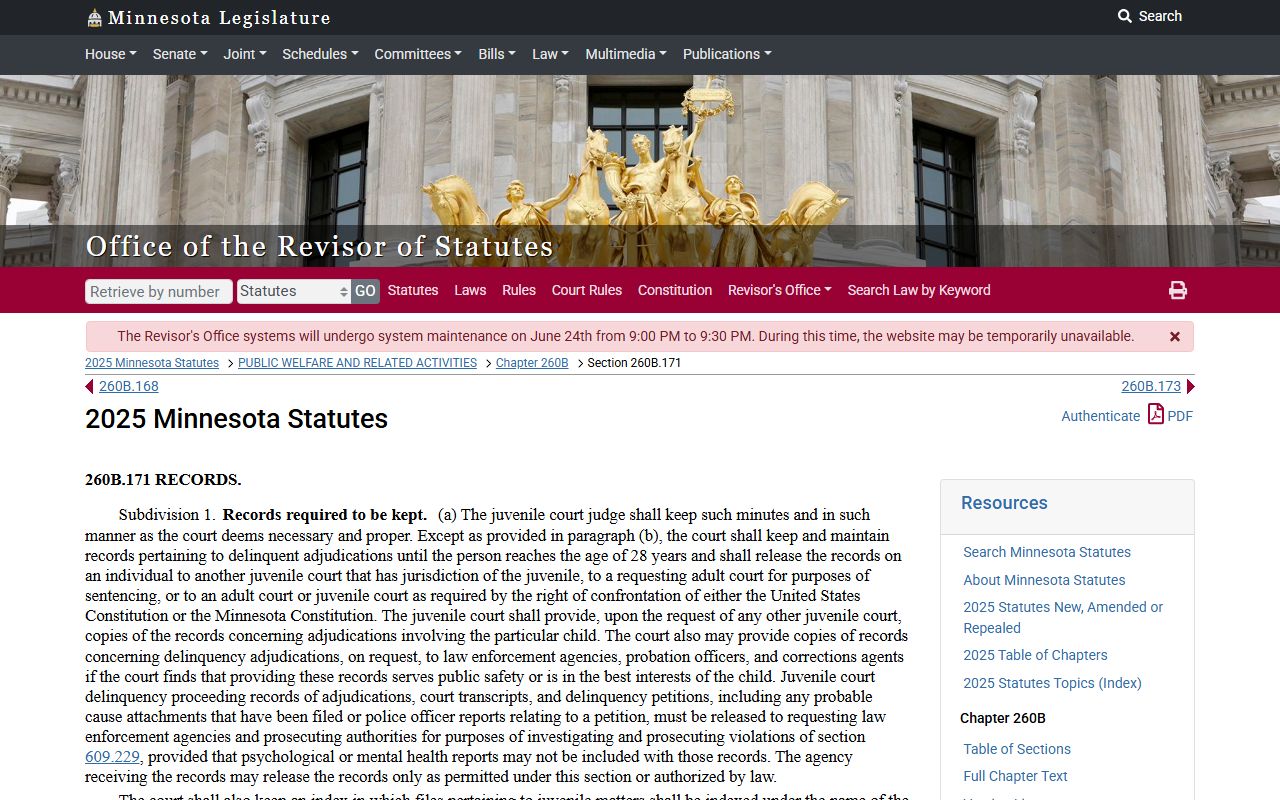
Juvenile, sealed, expunged, and protected matters require more caution than ordinary adult public criminal case files.
Sealed vs Expunged Records
Sealing and expungement both limit public access, but the practical effect depends on the order and the record system. In Houston County, a criminal expungement petition is filed in District Court. Minnesota Statutes chapter 609A controls eligibility categories, and the state fee schedule lists Criminal Expungement at $310 unless a fee waiver or no-fee statutory path applies. If an order is granted, MCRO should not display the sealed content to the general public.
| Point | Sealed | Expunged |
|---|---|---|
| Public visibility | Hidden from general public view by rule or court order. | Access is sealed or limited under the expungement order or statute. |
| Where filed | May arise from a protected case type, order, or confidentiality rule. | Petition is filed in District Court unless an automatic statutory process applies. |
| Agency effect | May affect court access only unless other agencies are covered. | Can require broader executive-branch sealing when the statute and order apply. |
| Key source | Rule 4 and case-specific orders. | Minnesota Statutes section 609A.02 and related expungement procedures. |
| Public search result | MCRO should not show sealed content to ordinary remote users. | MCRO and BCA results may omit records removed from public access. |
The official Minnesota expungement eligibility statute is the source for many criminal expungement categories.
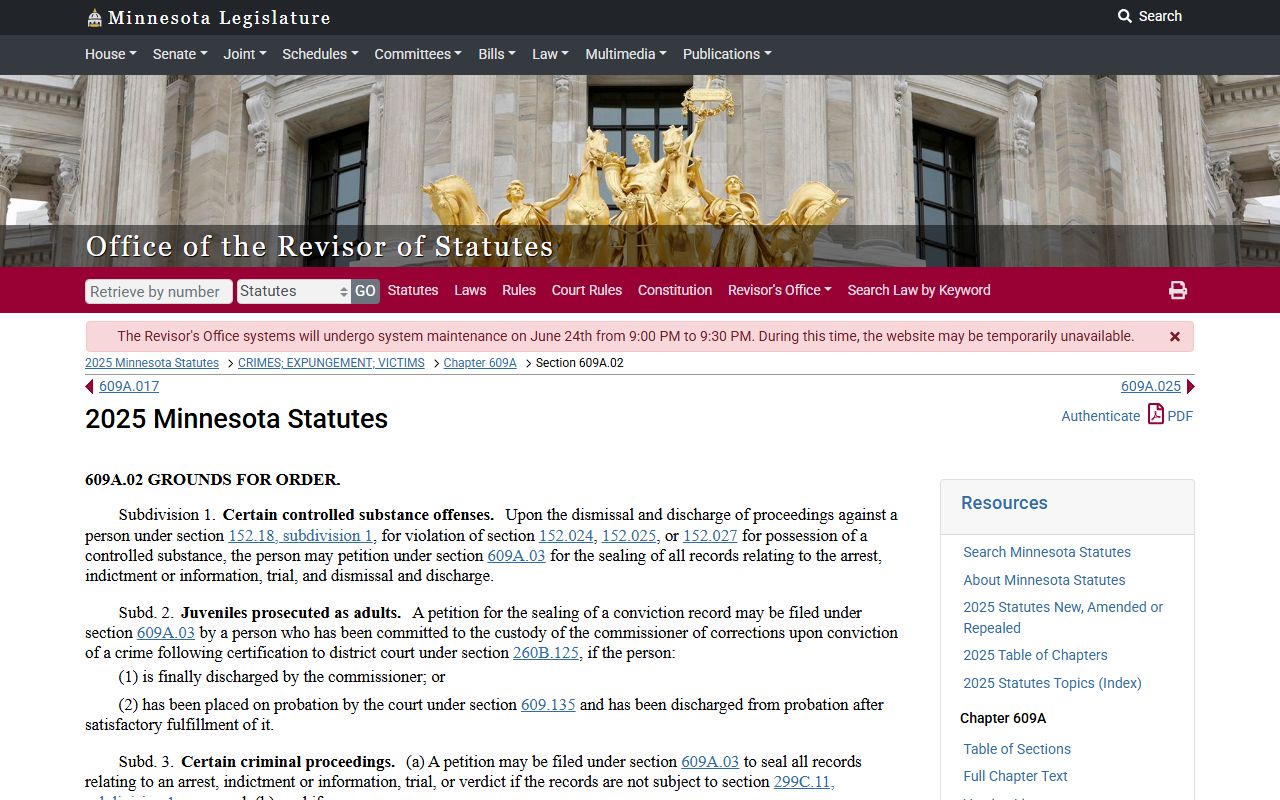
The research also notes that cannabis-related automatic expungements affected BCA criminal history records as of May 2024.
Houston County Criminal Case Offices
The Houston County Attorney's Office is located at the Justice Center and is listed as chief prosecutor for felony, gross misdemeanor, and juvenile offenses in Houston County. The office also handles county and contract misdemeanor or petty misdemeanor prosecutions. Victim Services Coordinator Michelle Herman is listed with phone 507-725-5831 and email victimservices@hocomn.gov. Criminal court records may reflect prosecutor filings, hearing events, plea agreements, and sentencing, but the prosecutor's role is not the same as the court custodian's role.
Public defender information is also separate from the court record. Houston County sources list a Rochester public defender number, and the Minnesota State Law Library legal referrals page lists the Third Judicial District public defender office in Winona for court-appointed services in criminal and juvenile delinquency cases. Those offices may be relevant to a defendant or party, but certified copies of the Houston County criminal court record still come from Court Administration.
Houston County Court Administration
306 S. Marshall Street
Caledonia, MN 55921
(507) 724-7002
Monday-Friday, 8:00 a.m.-4:30 p.m.
Houston County Attorney
306 S. Marshall St., Suite 2300
Caledonia, MN 55921
(507) 725-5802
State and Federal Criminal Records
Most Houston County criminal court records are Minnesota District Court files. Federal criminal cases are different. Houston County is in Minnesota, so federal trial cases are handled through the U.S. District Court for the District of Minnesota, not MCRO. Federal prosecutions in Minnesota are handled by the U.S. Attorney's Office for the District of Minnesota, and federal custody is searched through federal systems, not the Houston County jail roster or Minnesota District Court case search.
The official U.S. Attorney's Office for the District of Minnesota source applies to federal prosecutions, not ordinary Houston County District Court criminal case files.
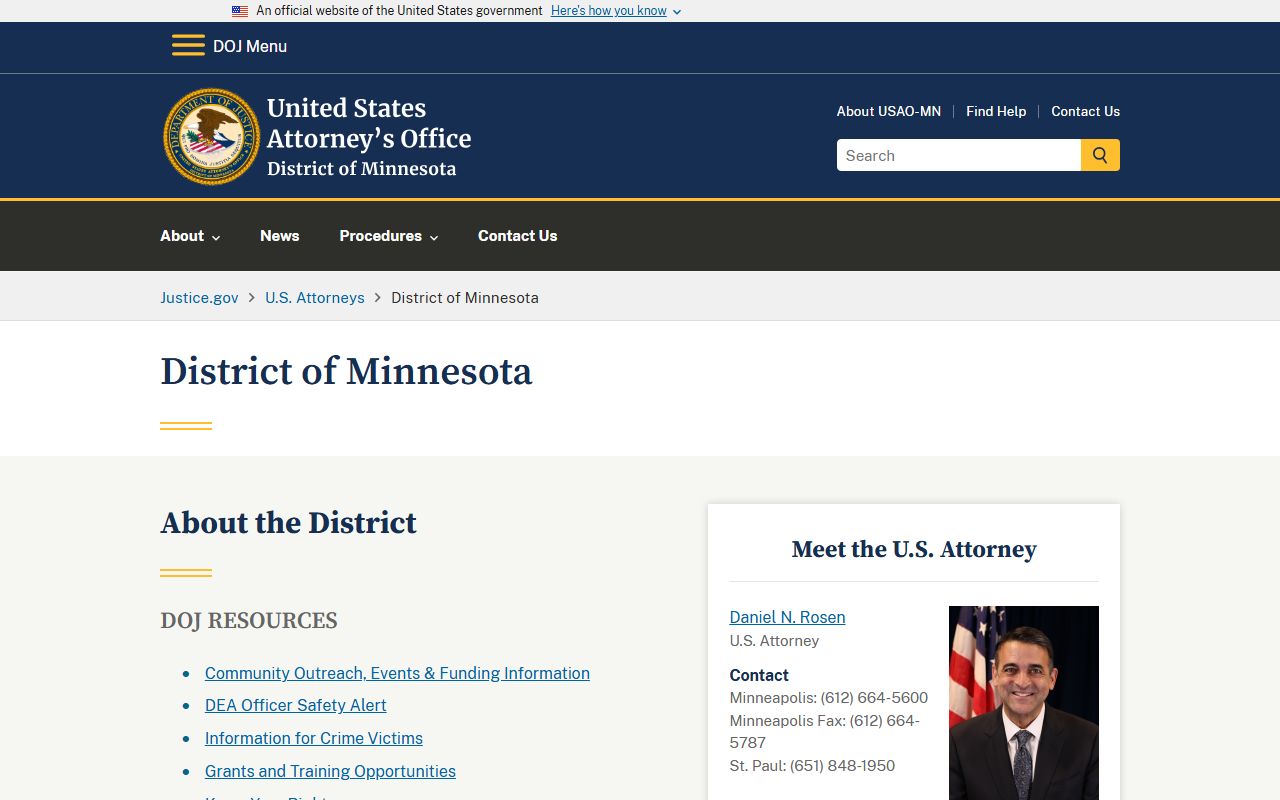
Use MCRO for state District Court cases and federal court systems when the prosecution is federal.
The manifest also includes a local news source, KTTC's Houston County sheriff salary appeal report, which concerns the county law-enforcement and court ecosystem but does not change criminal record access rules.

Local law-enforcement news can add context, but official court records access still depends on MCRO, Court Administration, and Minnesota access rules.
Note: Arrest reports, jail custody, criminal history, and criminal court records are separate record systems.